Dragonwilds farming guide: plots, seeds, compost and disease
Everything you need to know about Farming in RuneScape: Dragonwilds, from building your first plot to running a farm that gives back more seeds than it uses.
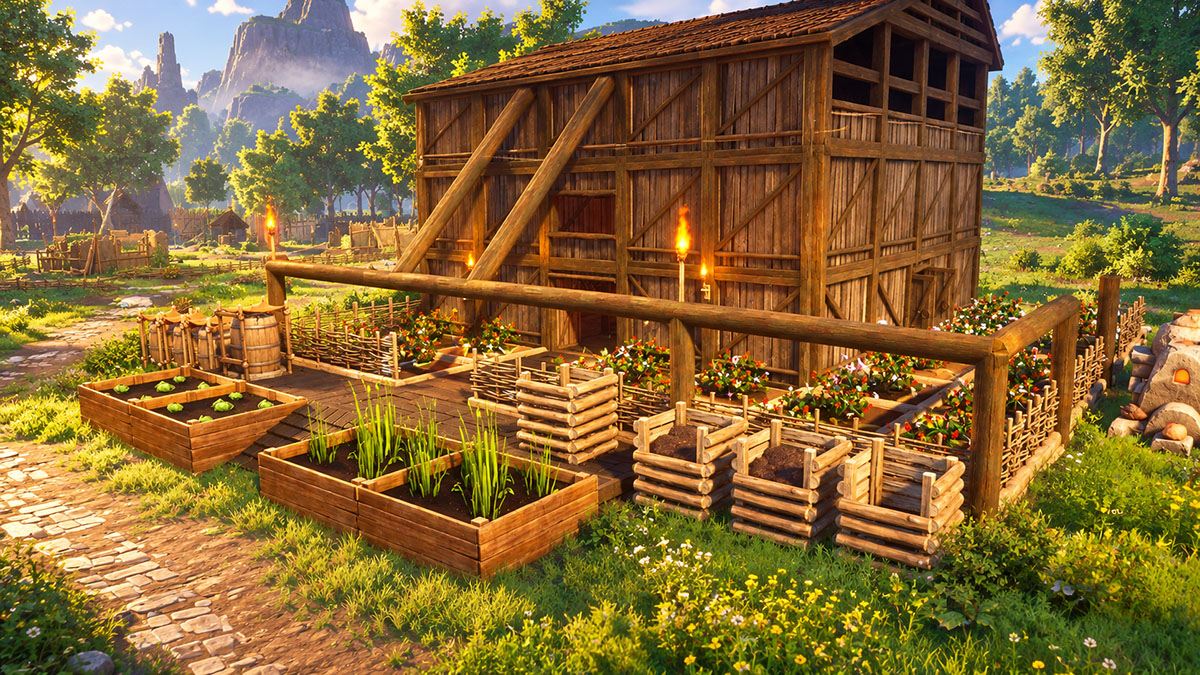
The short version
- Unlock Farming by completing the Growing Pains quest from the Wise Old Man in Bramblemead Valley.
- Plant every seed in the plot that matches its home region: Ash, Oak, Willow or Yew.
- Water once a day (clean water is best) and add compost once per crop.
- Crops take two in-game days. A diseased crop dies the next day unless you cure it.
- Harvest with iron secateurs (level 42) for the biggest yield. Up to 15 crops per plot.
- Seed Recovery grows by 0.3% per level, so low-level farms often can't replace their own seeds yet.
How to unlock Farming in Dragonwilds
Farming arrived in RuneScape: Dragonwilds on 15 December 2025, as part of the Fellhollow update. You can't plant anything straight away: first you need to finish a short quest.
- Find the Wise Old Man in Bramblemead Valley and talk to him to start Growing Pains.
- Complete the quest. As well as unlocking the skill, it can reward you with Spare Farmer's Supplies, which contain a plant cure.
- Open the Build Menu and place your first farming plot.
You earn Farming XP from almost everything you do on a farm: weeding, sowing, watering, composting, curing and harvesting. Harvesting and watering give the most, which we come back to in the XP section.
Farming plots and regions
Every seed in Dragonwilds belongs to one of four regions, and each region has its own type of farming plot. All plots cost 8 logs of their own wood type. Planting a seed in its matching plot is the single easiest way to keep disease down.
| Plot | Build cost | Region | Seeds that belong here |
|---|---|---|---|
| Ash | 8 ash logs | Brynmoor | Cabbage, flax, harralander, marrentil, potato, redberry, wheat |
| Oak | 8 oak logs | Ghornfell | Dwellberry, kwuarm, onion, snapdragon, swamp weed, toadflax, tomato |
| Willow | 8 willow logs | Fellhollow | Avantoe, cadavaberry, corpse cotton, irit, pumpkin, watermelon |
| Yew | 8 yew logs | Umbral Sands | Barrel cactus, bunny cactus, desert weed, pipe cactus |
A crop will still grow in the "wrong" plot, but it is much more likely to catch disease. The wiki describes the risk as significantly higher for higher-tier crops planted in lower-tier plots.
Not confirmed yet
Nobody has published the exact size of the wrong-plot disease penalty. Our seeds calculator assumes it doubles the disease chance, so treat its wrong-plot results as a rough guide.
Only tree seeds can be planted straight into the ground. Everything else needs a plot.
Where to get seeds
Seeds come from three main places:
- Wild plants you pick while exploring.
- Chests and packs dropped by enemies.
- Your own harvests, through Seed Recovery.
Some seeds have well-known sources, which are worth knowing if you're hunting for something specific:
| Seed | Where to look |
|---|---|
| Wheat | Goblin packs |
| Tomato | Garou packs |
| Kwuarm | Garou packs (it doesn't grow wild) |
| Watermelon | Skeleton packs |
| Harralander, marrentil | Whispering Swamp |
| Swamp weed, toadflax | Bloodblight Swamp |
| Onion | Wild onions also grow in Dowdun Reach |
| Cadavaberry | Fellhollow |
| Avantoe | Dowdun Reach and Umbral Sands gold reward packs |
| Tree seeds | Chopping the matching tree, and bird nests |
To plant a seed, equip it and use it on an empty, weeded plot.
Clearing weeds and planting
A new plot starts covered in weeds, and an empty plot grows another layer of weeds every day, up to a maximum of three layers. You have to dig every layer out with a spade before you can sow anything.
- Each layer gives 3 Farming XP and 3 weeds.
- Better spades clear weeds faster. The wooden spade is made at a crafting table; bronze, steel, undead, adamant and rune spades are made at a blacksmith's bench.
- Keep the weeds: you need them for plant cure, and they're useful compost.
Sowing a seed gives 5 XP, whatever the seed or plot.
Tip
Replant as soon as you harvest. A plot that stands empty starts growing weeds again, which means more digging tomorrow.
Watering: dirty vs clean water
You can water each plot once per day. Watering does two things: it raises your harvest by 15% and it lowers the chance of disease. The type of water matters for disease, but not for yield.
| Water | Yield | Disease chance | Where it comes from |
|---|---|---|---|
| None | ×1 | ×0.8 | — |
| Dirty water | ×1.15 | ×0.3 | Ponds, rivers and other natural water |
| Clean water | ×1.15 | ×0.2 | Rain catchers, wells, rain and the Humidify spell |
Getting clean water
- Rain catcher (level 6): 6 ash logs and 4 stone. Holds 300 water and fills up when it rains.
- Well (level 32): 32 stone, 6 ash logs and a vault core. Holds 700 water and refills every morning, rain or shine.
- Rain waters your plots with clean water for free. It gives no XP, though, and it won't cure diseased plants.
- Humidify (level 28) waters every plot in a line in front of you with clean water, as long as you have a watering can with you.
Water barrels
A water barrel (level 24, 8 ash logs) holds 500 water, and a large water barrel (level 46, 10 oak logs) holds 1,000. A barrel becomes clean or dirty depending on the first water you put in it, and you can't mix the two afterwards. If you collect both kinds, build one barrel for each.
Watch out
Boiling dirty water at a campfire gives you clean water for recipes such as plant cure, but you can't pour boiled water into a watering can. For your plots, clean water has to come from a rain catcher, well, rain or Humidify.
Compost and super compost
Compost is the biggest single boost to your harvest. You only need to add it once per crop; it lasts until the plot is harvested and cleared.
| Fertiliser | Unlocks | Yield | Disease chance | XP per plot |
|---|---|---|---|---|
| None | — | ×1 | ×1 | — |
| Compost | Level 10 | ×1.5 | ×0.5 | 10 |
| Super compost | Level 60 | ×1.75 | ×0.25 | 50 |
Making compost
At level 10 you can build a compost bin (8 ash logs and 4 stone) and make a compost bucket at a crafting table. Drop organic items into the bin and each one is turned into compost in about five seconds. Most things are worth 10 compost each, including:
- burnt food, plants, wheat and logs
- animal bones, fangs, antlers and feathers
- herbs (except irit)
Raw food is only worth 1 each, so cook or keep it instead. To collect compost, wield your compost bucket and use it on the bin. At level 60 the super compost bin (8 willow logs and 4 sandstone) makes super compost in the same way.
Tip
There's only one tier of compost bucket, so carry several. You'll make fewer trips back to the bin when you have a lot of plots.
Crop disease and plant cure
Disease is what ruins most harvests. Each crop has a base chance of becoming diseased as it grows, and your plot, water and compost all change it.
| Base chance | Crops |
|---|---|
| 30% | Potato, tomato, pumpkin |
| 40% | Cabbage, flax, harralander, marrentil, dwellberry, onion, kwuarm, swamp weed, snapdragon, toadflax, watermelon, avantoe |
| 50% | Redberry, irit |
| 60% | Wheat, cadavaberry |
| 75% | Corpse cotton, desert weed, bunny cactus, barrel cactus, pipe cactus |
How much watering and compost help
Assuming the multipliers combine, which is how our calculator treats them, a potato in an Ash plot works out like this:
- No water, no compost: 30% × 0.8 = 24%
- Clean water and compost: 30% × 0.2 × 0.5 = 3%
- Clean water and super compost: 30% × 0.2 × 0.25 = 1.5%
That's the difference between losing roughly one crop in four and almost never seeing disease.
Not confirmed yet
The wiki gives disease chances "per growth cycle" but doesn't say exactly how many times a crop is checked while it grows. The "no water" multiplier of 0.8 is also listed as a penalty even though it lowers the number. We'll update this guide as testing settles both points.
Spotting and curing disease
A diseased plant has a brownish-yellow haze and shows "Diseased" when you look at it. It stops growing, can't be harvested, and dies the next day if you leave it. Once a crop is fully grown and ready to harvest, it can no longer catch disease, so it's safe to leave in the plot.
There are three ways to cure a plant:
- Plant cure. Unlocked at level 3. Combine 2 weeds, 1 animal bone and 1 clean water at a stone range or cooking range. You need to use a stone range once to learn the recipe.
- Humidify with Cleansing Rain. From level 50, Humidify cures every plant it waters.
- Farming cape. At level 99 the skillcape acts as an endless supply of plant cures.
A cured plant picks up at the growth stage it had reached. If it caught disease on its final day and you cure it the same day, you can harvest it straight away.
Harvesting and yield
Most crops have a base yield of 5. Flax, corpse cotton, desert weed and the three cacti have a base yield of 3. Three things multiply it, and the game rounds up after each step:
- Iron secateurs (level 42, made at a blacksmith's bench): ×1.25 while equipped.
- Compost ×1.5 or super compost ×1.75.
- Water (clean or dirty): ×1.15.
For a normal crop with everything: 5 → 7 with secateurs → 13 with super compost → 15 with water. That's the maximum, and it's three times the base yield. The low-yield crops top out at 9.
| Setup | Yield |
|---|---|
| Nothing | 5 (3) |
| Water only | 6 (4) |
| Compost + water | 10 (6) |
| Compost + water + secateurs | 13 (7) |
| Super compost + water | 11 (7) |
| Super compost + water + secateurs | 15 (9) |
The Uproot spell (level 15) harvests every grown crop in a small area at once, but it doesn't use your secateurs, so you get a smaller harvest. It's great when you're in a hurry; hand-harvest when you want every crop.
Seed Recovery: getting seeds back
Harvesting can give you seeds back, but only through the Seed Recovery passive. Its chance goes up by 0.3% per Farming level: nothing at level 1, about 14.7% at level 50 and 29.4% at level 99.
Our calculator treats each crop you harvest as a separate chance at a seed. That's why yield matters so much: at level 50, a 13-crop harvest gives back about 13 × 14.7% ≈ 1.9 seeds on average, enough to replant and bank a spare. The same plot with no compost or water gives back less than one seed, so your seed stock slowly runs out.
Will your farm replace its own seeds? Enter your crop, level and gear to see the average seeds back per plot, and the level you need to break even.
Open the seeds calculatorTip
Seed Recovery is an average, so some harvests will give you nothing. Keep a few spare seeds of anything rare rather than replanting your very last one.
Trees and berry bushes
Berry bushes (redberry, dwellberry and cadavaberry) don't need replanting after a harvest. They keep producing, but later harvests are smaller and give far less XP than the first.
Trees unlock with the Tree Farming passive at level 20. Tree seeds can go straight into the ground anywhere, without a plot, and grow without any upkeep. Ash, oak and willow trees can be harvested again and again. You get tree seeds by chopping the matching tree and from bird nests. Maple and yew seeds also exist; magic tree seeds can't currently be obtained.
Farming level unlocks
| Level | Unlock | What it does |
|---|---|---|
| 1 | Seed Recovery | Chance to get seeds back from harvests (+0.3% per level) |
| 3 | Plant cure | Cures diseased plants |
| 6 | Rain catcher | Collects clean water when it rains |
| 10 | Compost bin and compost bucket | Make and spread compost |
| 15 | Uproot (spell) | Harvests grown crops and wild plants in an area |
| 20 | Tree Farming | Plant tree seeds anywhere |
| 24 | Water barrel | Stores 500 water |
| 28 | Humidify (spell) | Waters a line of plots with clean water |
| 32 | Well | 700 clean water, refills each morning |
| 36 | Harvester | Upgrades Uproot |
| 39 | Speedy Farmer | Less slowdown while watering and composting |
| 42 | Iron secateurs | ×1.25 harvest yield |
| 46 | Large water barrel | Stores 1,000 water |
| 50 | Cleansing Rain | Humidify also cures disease |
| 55 | Scarecrow | Keeps birds away from your crops |
| 60 | Super compost bin | ×1.75 yield, ×0.25 disease |
| 74 | Rapid Growth (spell) | Pushes a plant on by one growth stage |
| 80 | Mucksplosion (spell) | A compost volcano that fertilises nearby plots |
| 90 | Overgrowth Aura | Upgrades Rapid Growth |
| 99 | Farming cape | Unlimited plant cures |
Jagex's original announcement described Farming as going to level 65; the wiki now lists unlocks all the way to 99. The wiki's Disease page also gives level 6 for plant cure, while its Farming and Plant cure pages say level 3. We've gone with level 3.
Farming XP tips
- Water growing crops in higher-tier plots. Watering a growing plant gives 15 XP in an Ash plot, 30 in Oak, 45 in Willow and 60 in Yew. Watering a plant that isn't growing (just sown, ready to harvest, diseased or dead) only gives 2.
- Harvest big. Harvest XP goes up with the number of crops you pick, and crops from later regions are worth more per crop. With the best gear, a full pumpkin harvest (Fellhollow) gives about 368 XP, almost three times the 128 XP from a full potato harvest (Brynmoor).
- Use super compost once you have it. It's worth 50 XP per plot, against 10 for normal compost, on top of the bigger harvest.
- Stack XP boosts. The Inspiring Ring of Farming gives +5% Farming XP, and Focused Farming potions and some foods add more. Boosts multiply together, but you only get one food bonus at a time.
A daily farming routine
Once your farm is running, this loop keeps it healthy. Growth happens at the start of each in-game day, so sleeping moves your crops along.
- Check every plot for the brownish-yellow disease haze and cure anything sick first.
- Harvest anything that's ready, wearing your iron secateurs.
- Dig out weeds and replant straight away, ideally with spare seeds from the last harvest.
- Add compost to anything newly planted.
- Water every plot with clean water, or let the rain do it for you.
- Top up the compost bin with weeds, bones and burnt food, and keep a plant cure in your pack.
Dragonwilds farming FAQ
How long do crops take to grow in Dragonwilds?
Two in-game days. Crops move to their next growth stage at the start of each day.
Can I plant seeds in any plot?
Yes, but a crop in the wrong plot is far more likely to become diseased. Plant each seed in the plot from its own region.
Is clean water better than dirty water?
For yield they're the same (×1.15). For disease, clean water is better: it cuts the chance to ×0.2, against ×0.3 for dirty water.
How do I make plant cure?
From Farming level 3, combine 2 weeds, 1 animal bone and 1 clean water at a stone range or cooking range.
What is the maximum harvest?
15 crops per plot for most crops, or 9 for flax, corpse cotton, desert weed and the cacti, using iron secateurs, super compost and water.
Why am I running out of seeds?
At low levels, Seed Recovery is too small to give back a seed per plot. Raise your yield with compost, water and secateurs, and check your setup in the seeds calculator.
Sources
This guide brings together the RuneScape: Dragonwilds wiki and Jagex's own announcement, rewritten and cross-checked. Where sources disagree we've said so above. Game updates can change any of these numbers.
- Farming, Disease, Plant cure, Compost bin and Seeds on the RuneScape: Dragonwilds wiki
- Introducing Farming, Jagex